Saturday, December 25, 2010

WOC writing about self-actualization

sometimes change is an uphill battle but luckily books have their way of finding me at the right time. i wrote this a few days before i reached page 45 into gloria anzaldúa's la frontera. there is a similar tone and analogy. i am inspired and reassured by her writing: her content and its structure (and lack of it).

She left in the end of fall, beginning anew in the dead of winter. Heaving boxes up stairwells in hailstorms and thunder, she challenged the world to open up—to welcome her.

She stirs in bed, alone, fitful and weighted down by the potential of tomorrow.

Inauspicious, yes, but she was one to challenge the spirits. They would hold duels, push and pull. The lightening raised its voice beyond her own. She knew this but would fight before giving in.

Anzaldúa:
"...And though she was unable to spread her limbs and though for her right now the sun has sunk under the earth and there is no moon, she continues to tend the flame. The spirit of the fire spurs her to fight for her own skin and a piece of ground to stand on, a ground from which to view the world-- a perspective, a homeground where she can plumb the rich ancestral roots into her own ample mestiza heart. She waits till the waters are not so turbulent and the mountains not so slippery with sleet. Battered and bruised she waits, her bruises throwing her back upon herself and the rhythmic pulse of the feminine. Coatlalopeuh waits with her."

Monday, December 06, 2010

an honest profile*

If my heart and my mind could bleed in ink, they would scrawl that I am tired of dates talking about neo-liberal politics. Stop telling me that capitalism offers solutions; you are ruining my dessert. I am tired of men who think their brain-power correlates to their dick-power. I am tired of dates acting like I have never changed or that I do not have the right to grow beyond their level. High school was a decade ago, homeboy. Sorry, I am particularly busy this weekend if you are a male my age who believes he is a gangster or a hipster-ly grandfather. Or worse, if you are a man who mistakes himself for my teacher. I am not here to take notes on your lecture, please do not email me your powerpoint. I am not asking to be psychoanalyzed. I can find a therapist on my own. I am in the process of shaping myself so I believe I know her better than you.

Look, if my heart and my mind could sing in ink, they would scat in poetic prose. My soul would place clues of herself around Town: a few books strung in eucalyptus trees, scars from running on the schoolyard, teardrops swimming in the Lake, and a memory of the first time I heard Tupac rap. Listen closely as she whispers stories of her people, marvel as her skin dances to rhythmic sunny afternoons, support her though she may tremble-- unraveling a warrior's wounds. Know that to completely find her, you must weather the rain, wait for marigolds to bloom in spring, then you might enjoy the shade of her garden, begin investigating that which hides in the shadows.

If you are lucky, you may find her at sunrise. Overlooking her city, she commemorates previous iterations of herself. If you are courageous, you may follow her today. Alongside her. Reverent.


*Dating always feels like a social experiment. On the bright side, I appreciate the opportunities to get to know who and what I like and don’t like, who I am, who I am not and even who I refuse to be.

Monday, November 29, 2010

Years apart*

Remember when you asked me to think of home?
We talked about motherlands, more complex than our words unspoken
Next to a fire, we had curled in separate armchairs
Stupidly spoke of seizing love and life.

Today, we are
years apart
and
I thought of you.

-------------------------

* simply cannot post the full piece.

Sunday, November 14, 2010

unrevised

Write with your tongues of fire. Don't let the pen banish you from yourself. Don't let the ink coagulate in your pens. Don't let the censor snuff out the spark, nor the gags muffle your voice. Put your shit on paper.
-Gloria Anzaldúa


jot some words on scratch paper one night. i want to add, "prepare a new canvas."
reading some poetry from My Words Consume Me: An Anthology of Youth Speaks Poets.

Saturday, November 13, 2010

multiplicity

(these are lines in a poem somewhere. i am still out finding the rest of it.)

...
Be it we are
Yellow like the canvas for nationhood, three lines of blood red slid down our calloused hands.
Or Yellow like a single star, like a big dipper pointing forward through centuries of red tumultuous struggle.

Thursday, November 04, 2010

criminal. poet. man.

I’m not about to join their tirade against beautiful, young, criminals who in some other world could have been poets, or men. -Ishle Park*


Dear A_____ and R_____:

I don’t know you. Or at least, I don’t know you well. So some people may already scream and throw a fit at my audacity to begin to write this.

First, it was so good to see you two, last week. I was happy that you smiled when you saw me.

Secondly, I wanted to tell you I left your school that day with so many different feelings. You don’t know this, but while I waited on the schoolyard for another teacher, I watched one of your schoolmates. Mr. ____ had ended this boy’s flag football game because the period was over. The boy started yelling about unfairness and how he was so close to winning. He threw his flags into the box on the ground and went on, ranting and stomping in anger. I kept thinking to myself the words of a poem, “in some other world could have been poets, or men.” I got emotional and angry, myself. I was upset, not at his anger. I was upset because he really believed he lost his only chance to prove his worth: in a flag football game in P.E. class. He needed to do it then and there. If only he could have shown how fast he could twirl, break a tag, and dash to the end zone, maybe life would be good for a brief second. There was little possibility outside of that field of concrete. I was distraught at being reminded that he was most likely right.

I realize now, though, that in his anger is hope. Do you think he yelled because he saw opportunity? P.E. class won't change his life, but at least he was still fighting. I am stuck asking what is worst: lacking opportunities or having to fight so hard to make the small ones bigger than they are?

A_____ and R_____, I am also writing you this letter because you both asked me questions of the same vain. “Do you still teach?” You may not remember—and maybe what you’ve already learned about manhood won’t allow you to recall this—that you looked at me with bright eyes and spoke with a stoic curiosity. I know in your brilliance, you were asking more than the words you spoke. I still think you were asking, “Did you move on? Did you find something better than us?” In my own way, I voiced versions of the truth with conviction, hoping you would feel the depth of what I heard and understood in your question. You are both criminally young, beautiful men and I pray you grasp your power before it grasps you.

I now end this letter with the same hesitance I had in beginning it. As much as I feel some of the pains you two have experienced-- because we are similar-- I feel I deserve to say nothing. I don’t live in West Oakland; I don’t live your lives. My visits are nothing more than a salve to my self-conception, and, for you, possibly a minuscule token of love. I feel guilty for having the privilege of being able to step back from the situation. I feel my hands are tied from doing more for you, alongside you. I am not sure of even the possibilities. Maybe your schoolmate can teach me to fight harder to imagine them.

Until next time...
Ms. V


_________

* poem performed here

Sunday, October 17, 2010

Pause.

I have been writing more in the last month than I have in a long time. I worry when I produce so much. In part I am scared because of my misconception that creation should be difficult, painful, draining. Also, I fear writing to appease, writing to meet expectations, and most of all I am scared of losing myself, my intentions, and my message in the process of creation.

There are a few pieces that still keep me grounded over many years. Before I share more recent writing, I will pause to revise them and to make sure I stay true to myself.

* * *
This quote was shared to a group of hikers in Tibet. The instructor had it passed down to him by a friend who came across it, hiking in the East Coast, I believe. It was carved into the side of a barn at the end of a hike. I was lucky enough to have heard of it myself.

Some people do not have to search, for they find their niche early in life and rest there seemingly contented and resigned. At times I envy them, but mostly I do not understand them... and seldom do they understand me. I am one of the searchers. There are, I believe, millions of us. We are not unhappy, but neither are we completely content. We continue to explore life, hoping to uncover its ultimate secret. We continue to explore ourselves, hoping to understand. We like to walk along the beach, we are drawn by the ocean, taken by its power and unceasing motion, its mystery, and unspeakable beauty. We like forests, mountains, deserts, hidden rivers and lovely cities as well. Our sadness is as much a part of our lives as our laughter. To show our sadness with the ones we love is perhaps as great a joy as we know, unless it is to share our laughter. We searchers are ambitious only for life itself and for anything beautiful it can provide. Most of all, we want love and to be loved, to live in a relationship that will not impede our wanderings and prevent our search. We do not want to prove ourselves to others and to compete for love. This passage is for wanderers, dreamers, and lovers who dare to ask of life everything which is good and beautiful.

* * *
I learned of Jean Grae and this song my first year of college.
Still some of my favorite lines, lines I wish more young womyn heard:
startin over-- neva easy
but it takes some time to realize your own worth
come into your own
play of mental rebirth.


* * *
One of the writings that inspired me to pick up my pen again is Gloria Anzaldúa's letter/essay to women of color: "Speaking in Tongues: A Letter to 3rd World Women Writers." Since then, I have noticed the moments I write-- in the broadest sense-- are not always what you expect. I write when breezing through the Town on my bike. I write between bus stops, thinking about the people I see and their stride, their demeanor, and their physical and figurative baggage. I write as I lay my head down for the night, and sometimes this means I jump up to scribble a few lines at my desk before going to bed. So here are the words that put writing in perspective, responding to Virgina Woolf's argument that women (read-- white, middle-class women) need a room of their own before they can create and write.

Forget the room of one's own-- write in the kitchen, lock yourself up in the bathroom. Write on the bus or the welfare line, on the job or during meals, between sleeping and waking. I write while sitting on the john. No long stretches at the typewriter unless you're wealthy or have a patron-- you may not even own a typewriter. While you wash the floor or the clothes listen to the words chanting in your body. When you're depressed, angry, hurt, when compassion and love possess you. When you cannot help but write.

Monday, October 11, 2010

All I need

dedicated to a woman who writes poetry, plants poetrees, nurturing poetesses.

I was moved as my train pushed north and I watched miles of graffiti lettering unfurl behind buildings. I thought: people can risk their lives to create beauty even if few ever get to bear witness to that effort and even if those who are lucky enough to briefly peer into the process or catch glimpse of the end product may not appreciate its meaning. They may barely know how to or be ready to accept such offerings.

But we create and we love anyways, despite this knowledge, if not driven by it.

Even in its uncertainty, I find strength. Give me a slab of concrete canvas. All I need are these slivers of opportunities, openings to live a little deeper, a moment to imprint my life onto yours.

Tuesday, October 05, 2010

Bits & pieces

feeling a lot of inspiration.

by feeling, i mean physically trying to hold it together. everything is a trigger lately. woke up one day last week at 4 in the morning. grey skies failed to comfort me so i found my work instead. when i get nervous, i feel like throwing up. i end up sitting quietly, trying to attack my reasons for nervousness but rarely get out the words. could this just be me? or is it some womanly thing, body revolting against my disrespect. i worry about her.

"... laughter is serious. More complicated, more serious than tears." -Toni Morrison

i am also currently feeling empty. this saddens me. try to laugh it off. have been telling myself though that this space of emptiness is created through growth, not loss.

Friday, September 03, 2010

Oh Unemployment, how you toy with my heart, you!

Unemployment has been a friend of mine for only a month now and already we have had an emotional time together. He has opened my heart to dreams and disappointment. This time has been an exercise in resilience. Quick! Get up! That (other) dream job is slipping away. Some days are filled with high expectations and heart-pounding nervousness, first-date-worthy nervousness. Others are idle. I sit; I wander; stare at flowers and glance at my empty inbox. After stillness comes time to accept that I need to find other people, make better matches, and clarify my availability.

Sometimes, I am given reason to find myself saying, “Yes, I am available to move to New Orleans. ASAP? Why yes, of course!” I imagine packing my (at the moment, nonexistent) car with a bike, a suitcase of books, clothing, and a soul album or two. I’d decisively slam the trunk, tearfully meander through Oakland one last time and commit myself—like any strong-headed woman would—to a new life, heading out on my first solo road trip.

Most of all, my friend Unemployment has given me plenty of time to sit in front of postcards of Hugo Chavez and replicas of Vietnamese water buffaloes, dusty gifts from years past. Time to think about how there is no time to turn down jobs, only pressure to move forward. What right does this poor woman of color have to pass on opportunities? Who do you think you are, to deserve security, to live with dignity and sanity? Are you really asking to be paid for creativity and thoughtfulness? But the strength of this friend has taught me that there are worse things in life. I would rather keep my soul than expect less. I'm grateful for our time together.

Like some friends, though, I know Unemployment will soon slink into the background of my life. At times, he’ll say hi just to remind me of our possibilities together. Other times, I’ll even choose to be with him because the alternative will be too painful.

Thursday, September 02, 2010

Baldwin's the Cross of Redemption

Gotta cop this book soon and start finding that Baldwin-esque voice.

Ill-literacy member, Adriel Luis on Baldwin's legacy.

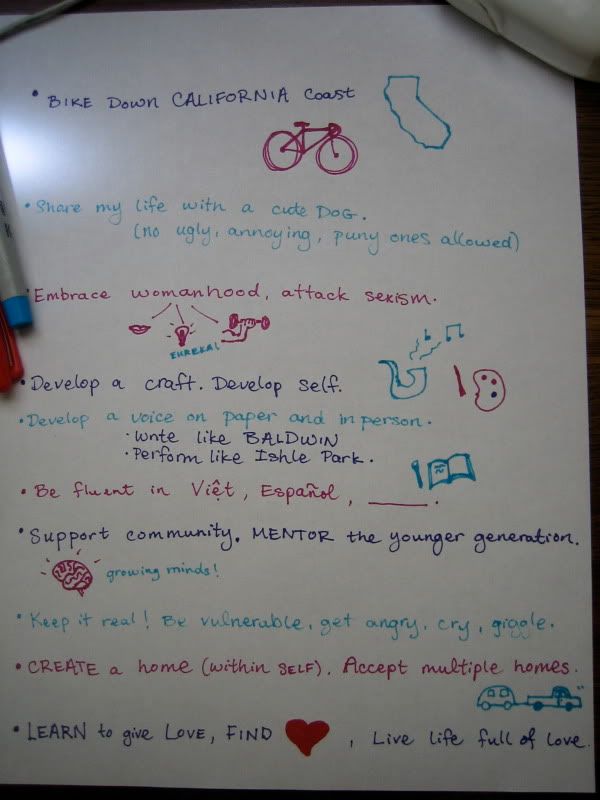
Life goals as of now

Inspired by a certain Viet lady.

Note the overuse of the word "develop." Also, nothing about marriage or children. kthx!


Tuesday, July 13, 2010

Anti-racist Feminist Inspiration

Here is a bare-bones description of my own feminist vision: this is a vision of the world that is pro-sex and –woman, a world where women and men are free to live creative lives, in security and with bodily health and integrity, where they are free to choose whom they love, and whom they set up house with, and whether they want to have or not have children; a world where pleasure rather than just duty and drudgery determine our choices, where free and imaginative exploration of the mind is a fundamental right; a vision in which economic stability, ecological sustainability, racial equality, and the redistribution of wealth form the material basis of people’s well-being.
-Chandra Talpade Mohanty
Feminism without Borders

Tuesday, July 06, 2010

Is There Justice?: Fears on Hearing Mehserle Verdict

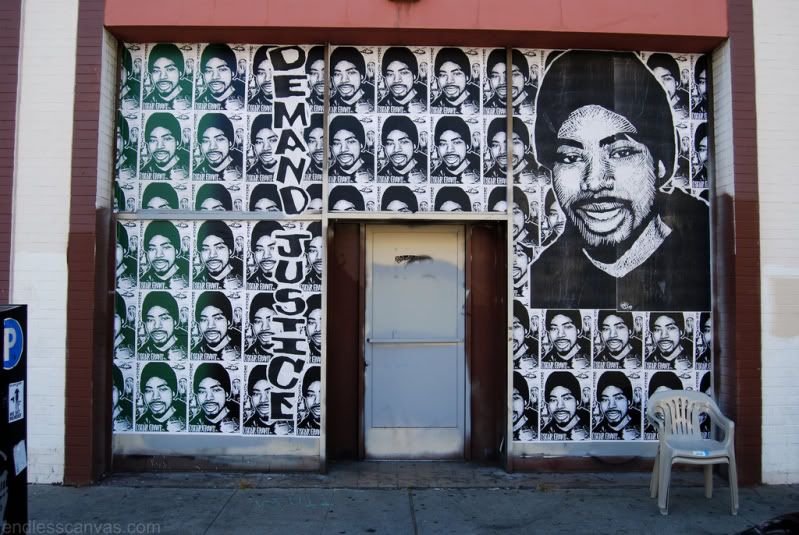
Etched posters on Webster & 14th St (-ish).


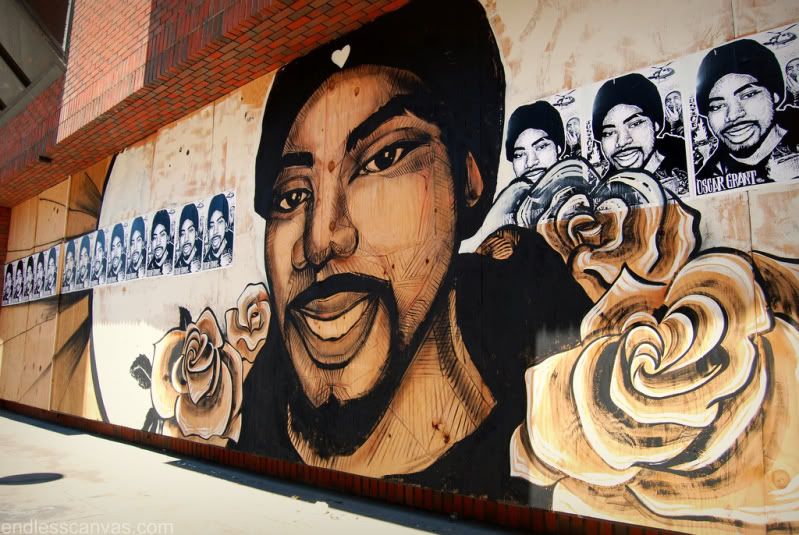
Last week at West Oakland Middle School, normally calm adults jumped at loud noises. The week before we started teaching summer school, we found out about a shooting injuring five mourners in a crowd.* The vigil in West Oakland was for a young man killed at a bus stop in East Oakland. Youth taken by violence—unfortunately the line rings like a cliché. As we rolled out the first week of summer school, instructors and principals alike have been startled by July 4th firecrackers and trucks backfiring as the city awaits the verdict of Johannes Mehserle, the killer of Oscar Grant. Police control stations have been set up in advance and businesses have been boarding up their windows in preparation for a riot. I say—no matter what the verdict is, no matter how powerful the uprising—justice will not be served.

People are angry. Things will burn. I pray we all stay safe. These conditions have been building up for years. Though I do worry about the outcomes of an uprising, it is not this for which I am afraid.

What I fear is that—in anger—we lose the deeper analysis. What is the bigger picture we strive to see? First, even in the proceedings of the Mehserle trial, officials carried out unfair measures. Jamilah King from Colorlines reports, “Mehserle's trial was moved from Alameda County to Los Angeles after the presiding judge ruled that a fair, local trial wasn't possible. The jury currently deliberating Mehserle's fate doesn't have a singly [sic] Black juror, and reports from the courtroom are that some local Black press and outspoken Black journalists have been banned from the court room. All this sets up a false hope in justice through a court system predicated on exclusion, say some advocates. And the assault and murder of unarmed Black men wouldn't end, Gomez says.” As community organizer Christina Gomez reminds us, let’s continue pointing our finger to the racism in our country, killing segments of our society.

Furthermore, the conversation needs to progress to what we think is the role of policing. Do we think that security increases proportionally to the number armed men and women? I hope not. U.S. “defense” policy alone demonstrates my point. If we want to take it local, the complex development of crime can be read in a recent article in East Bay Express, which describes the relationship between crime and health care. Parolees linked with the services of health clinics are less likely to return to prison than those who were released from prison without similar support.

I would also argue we should expand our definitions of crime and justice. Our government officials operate under criminal impunity (seriously Oaklanders-- check out the link), whether one looks at SB1070, Prop 8, poverty, or unwarranted raids. On the point of impunity, Ta-Nehisi Coates of the Atlantic writes, “…if an officer can can [sic] demonstrate that he was afraid for his life, he'll walk [away from charges]. How do you know the officer was afraid? Because he says so. It's not important whether Amadou Diallo had a gun or not. What's important is that the cops thought he did.” Police officers are innocent until proven guilty, while people of color are guilty until proven innocent. Our laws protect our supposed protectors more than they do us. It is about time our laws protect people, in a country “for the people.”

In the end, what is “justice” to Grant’s family? Real justice would not have involved his murder.

The point is, no matter what the Mehserle verdict, I know that justice has not been served in this country. Not in this trial, not in many others. This doesn’t anger me as much as it saddens me. My greatest fear is not the violence. It is that the sadness of this place and time will eat at me. So I keep working. Let’s keep working.


- - - - - - - - -

* I believe one of the young people has passed and another may be blinded.


See the clip to the right-hand to get a sense of police response:
http://cbs5.com/crime/BART.shooting.trial.2.1781437.html
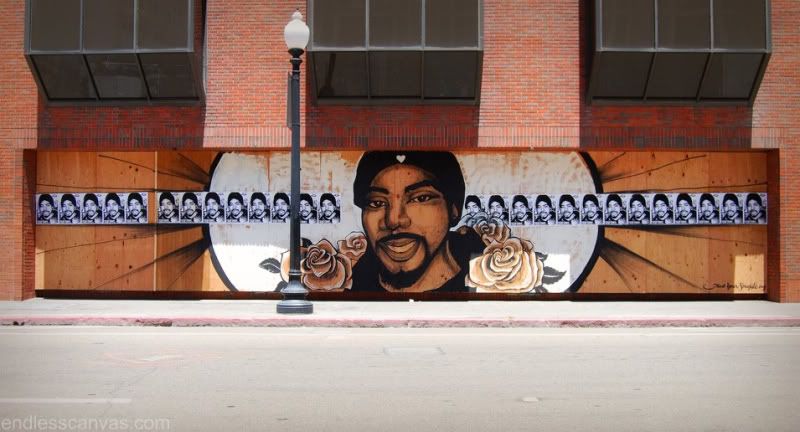


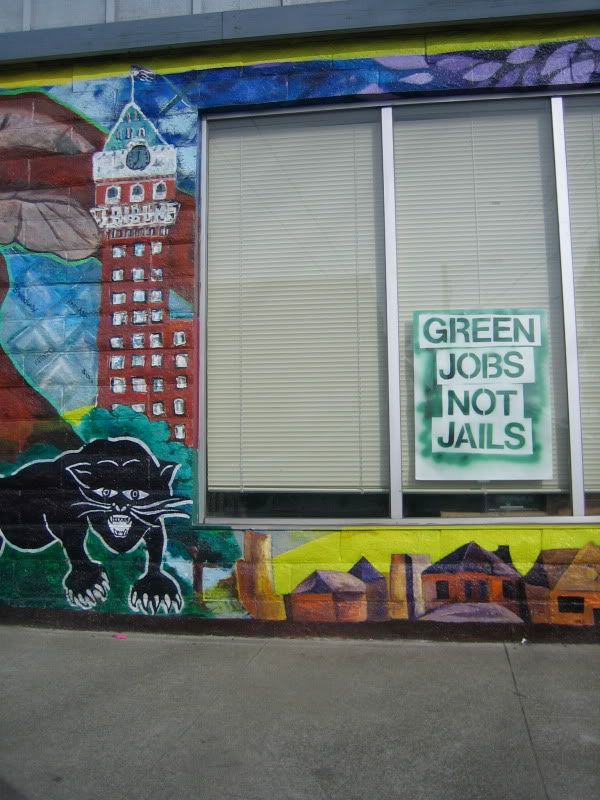
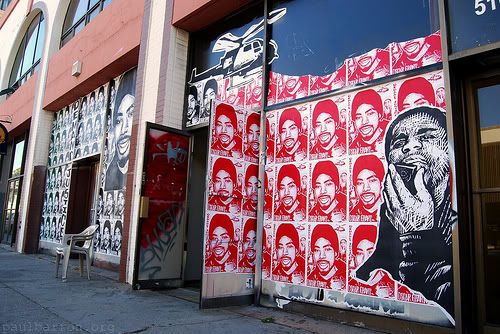
Mural on Broadway & 17th


Monday, June 21, 2010

Reflections on a Life of Change

I spent the last four months, slowly poring over Grace Lee Boggs’ memoirs, Living for Change. I started the book looking to her as a model for how an Asian American could contribute to radical movement in the U.S. Her words filter Marxism and dialecticism to their root concepts. Her book provides insight into the development of revolutionary groups from the 1930s to the present. She recalls what an Asian American experience was like, before there was an Asia America. In sharing this personal history, Boggs lays down a model for revolutionary thinking, continues to inspire, and—like good books do—this autobiography leaves me with more questions than answers.

Boggs is an inspiration in that she applies her Ph.D in philosophy to her revolutionary work. She has not isolated herself with privileged groups but instead brings her philosophical background to her planning and visioning with Detroit communities. In this effort, she has realized that revolution is more complex than even Marx described it to be. While Marx focuses on economic conditions, Boggs learned from Detroit residents that people must personally transform to the point which they can imagine life beyond their given conditions. In order to be engaged, they need to recognize that their individual and collective efforts do lead to real outcomes.

It is in her chapter “Beyond Rebellion” that Boggs details her Hegelian beliefs about revolution. It is also here that she critiques the Black Panther Party and other “aspiring revolutionaries.” She explains, “Even if [the Black Panther Party] had wanted to, they had not had the time to create a revolutionary philosophy and ideology and a structure and programs to develop the thousands who were knocking at their door. So they borrowed virtually intact Mao’s Little Red Book, without distinguishing between what is appropriate to China, or a postrevolutionary situation, and what is appropriate to the United States, or a potentially revolutionary situation.” She suggests that the party did not want to establish its philosophy and used Mao’s work in a misinformed manner. Boggs goes on to write, “Forced into a virtual civil war with the police both by the impatience of members and by provocateurs sent into the organization to destroy it, the party began to fall apart” (145). Not much credit is given to the Party and to those that were inspired by them. Signs of Boggs’ battle scars glimmer in this passage. Assuming this was written from a place of love, Boggs is impatient to move forward without wasting time on making mistakes. While this is understandable, it does appear contradictory to her humanist philosophy.

Based on the analysis laid out in previous chapters, Boggs’ described her current work in Detroit and how it focuses on getting people active in their community. She helped organize multiple groups to respond to violence, misguided and dangerous budgetary decisions, and to the environmental crisis. I admire how she and others in Detroit have expanded the meaning of “environment” to include schools, housing, jobs and other aspects of life.

It is also Bogg’s contemporary efforts and conclusions that I question as a young organizer, myself. She reflects, “Experience has taught me that in order to create a movement, people of widely differing views and backgrounds needs to come together around a vision, submerging ideological differences that will undoubtedly surface and create splits after the movement declines or succeeds.” In her ideals, a movement is focused around a vision. Unlike her, other radicals have focused on developing unity through political beliefs in order for their organizations to sustain itself despite disagreements about concrete action. Who has the better idea? Do we organize based on what we want to see happen or do we organize based on how we understand history and thus based on how we analyze current events? There are of course overlaps in these approaches. I see this today in how radicals and progressives work together though they might disagree about the need for revolution or militant action.

I am left to wonder, how radical is Boggs’ work today? Have young people like myself have overemphasized the work of groups in the era of the 1960s-1970s. Have I focused too narrowly at the positive without being able to learn from their mistakes? I also ask the question about her politics because Marxists would argue that her ideas about realizing our human possibilities are inherently an aspect of Marxism. I do not want to focus on whether or not these Marxist humanists are correct. Instead, I wonder about the implications. As Boggs pushes away from this school of thought, what has she been encouraging the organizers—young and old—around her to read, think, and argue? Are they becoming engaged without becoming analytical?

P.S.- U.S. Social Forum is in Detroit this year... and they are celebrating Boggs' birthday is in about 6 days. Happy 95th Birthday!

Saturday, May 29, 2010

Street Art: West Oakland

Rode my bike around West Oakland this week to acquaint myself with the gears of my new-old bike. I'm just going to say this once more: riding in Oakland is beautiful. I feel empowered as I actively engage with neighborhoods, make "driving" decisions, and rely on my body for fuel. The physicality of it is... well, pretty sexy.

Of course, like most developments in my life, biking reminds me that some have access to information and others do not. I watch bikers of color make dangerous decisions on their bike-- Asian men riding against traffic as they collect aluminum cans, black homeless men hauling their loads at night without lights, Latino men riding to work on sidewalks. And did you notice? Male bikers out-number female bikers. I am hoping as biking becomes more popular, more women will take it up as a mode of transportation. Eventually so many people will bike that urban planning will prioritize the two-wheelers over the four-wheelers. By then, it will be difficult to make bad biking decisions because the roads were planned for us, as it should have always been.

"A quality city is not one that has great roads but one where a child can safely go anywhere on a bicycle." -Enrique Peñalosa, mayor of Bogotá, Colombia. His events have inspired many similar ones like Oaklavia.

In the present day, however, advocacy groups unfortunately prioritize areas where white, middle-class cyclists proliferate. Way to shoot the cause in the foot...

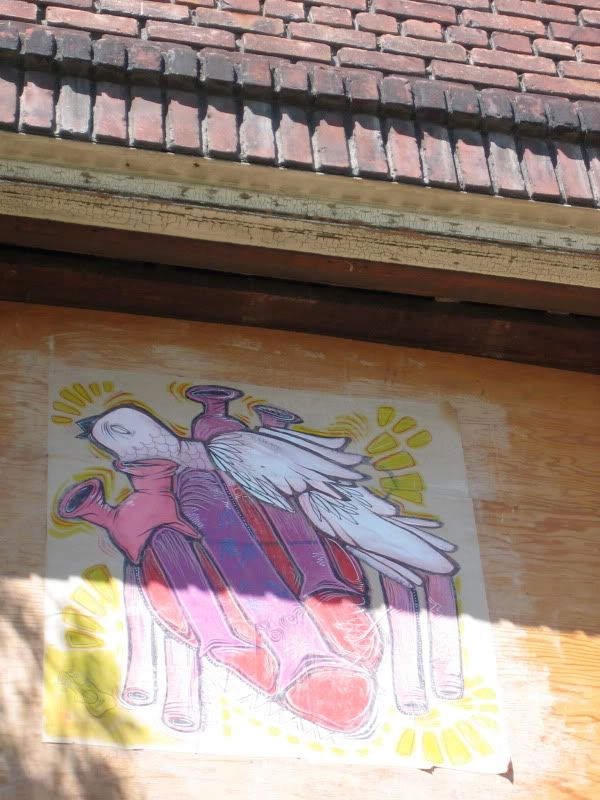
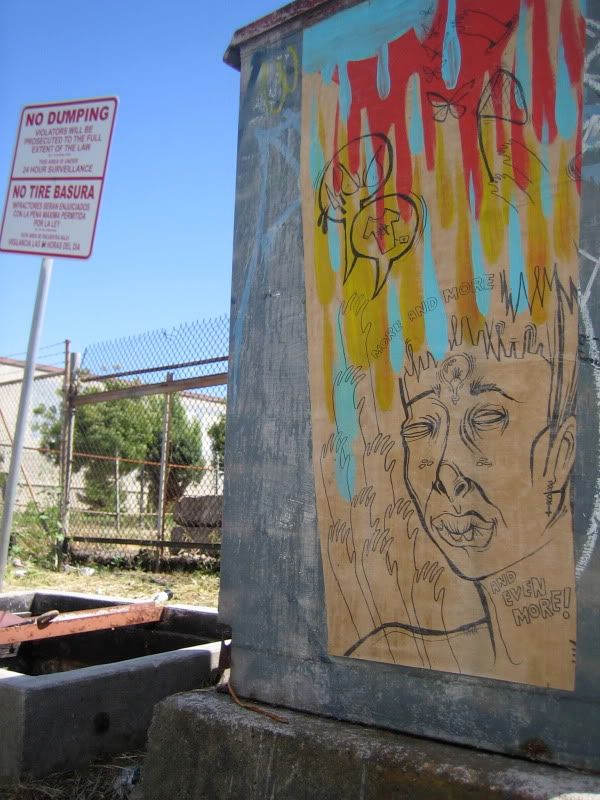
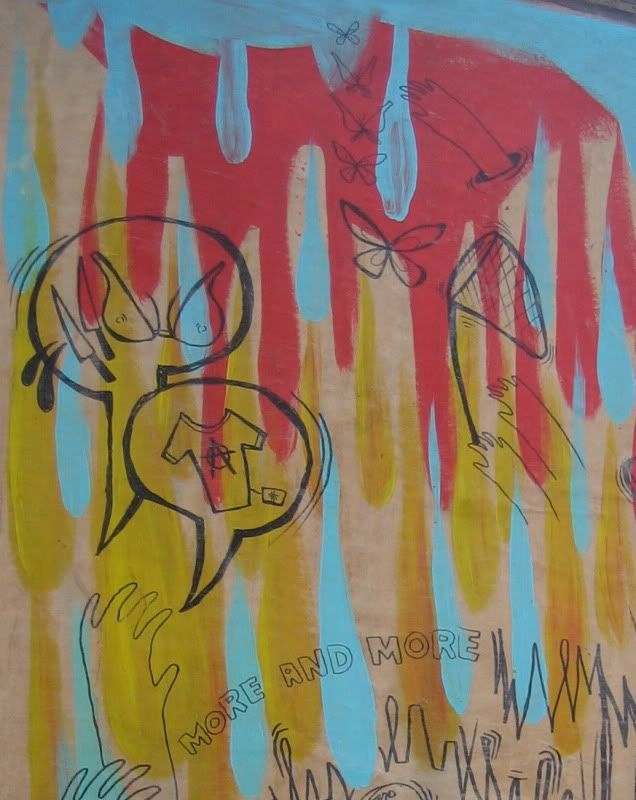
West Oakland is slowly seeing more bike lanes created. This is mostly due to the gentrification happening in Oakland. The photos below were taken on the same day. I would argue they were done by the same artists. One sees that the style of street art changes as a population changes. Sure, taggers of color use stencils and labels too... but rarely like what you see below. I would guess these pieces were created by someone who had more supplies and idle time on his or her hands.


If I had to name this, it'd be called "The Heart of Peace."


A critique of capitalism/neo-liberalism/neo-anarchism(?)


A close-up. What does the image of the bra and knives suggest?

Saturday, May 01, 2010

Loved Still

Once upon a time, I was young enough to want to be a writer. ...I hope I am aging backwards and recognizing and re-imagining possibilities. Below are some edited excerpts from my journal.

“I am also learning that I do not want to be loved as an anomaly. I always thought we were loved because we were special. I don’t want to be. I want to be loved as an equal, as not-exotic, as learner-teacher, as fallible, as human.”

I do not want to be held on a pedestal. I want to be recognized as imperfect, angry, horrible, and yet hopeful, changing, perfect.


I want to be seen--
as I am camouflaged in normality
as I float among faces like my own--
because I blend into a sea of humanity

I am noticed though
I am the same

I am neglected wildflowers
vased on
your table
beautiful one day
wilted the next
loved still
differently

I do not
cannot
sit still
on a pedestal

Love does not hold up
as exemplary,
it embraces
the everyday

I am the sun
shining through green-crystal leaves
random, indifferent, imperfect

I am not special
and you love me still
and you love me because

Saturday, April 10, 2010

Finding family... TEASER

Can one feel one’s life shifting rapidly? That one is on a path to better understanding oneself, building community, and resisting history?

I am working on a personal essay about this past week, about being Vietnamese American, about beginning to bust through barriers built around me.

It has become necessary for me to recognize that there are others like me; that Asian/Vietnamese/American radicals fight; that my work, politics, and being are not contradictory to my history, to the ancestors’ blood running deep in me. I’ve begun to understand that the contradictions of the Vietnamese-American community has held me back from further investigating our heroes, politics, and community. I am peeling back the veil and my heart jumps at what I am starting to see.

Monday, March 29, 2010

Evolving with Oakland

I think of this as a playful twist on the "rise up" mantra. This is bathroom decor in Jumpn Java's restroom. I spent a morning working there and half-listening to a high school adviser conduct an hour long parent-student conference. Ugh, painful.


"MOUCH"? I spotted this next to SubRosa Cafe, on my way to test-drive a bike next door... actually at a bike shop I previously disliked because it was named "Manifesto." But that's another story... Believe me, one feels alive cycling on city streets, speeding alongside cars. Oakland is beautiful via two wheels.


About two blocks down... is this mural alongside the Ella Baker Center for Human Rights, which is on my list of places to get better connected with.


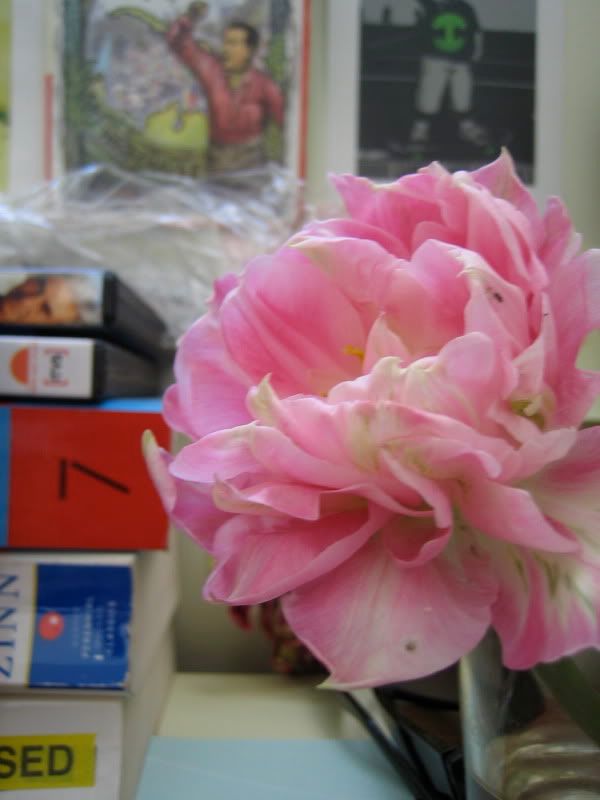
Spring tulips... enjoyed with a dash of Howard Zinn and Ronald Takaki.
(I know I'm not analyzing the images, but today, the story of how they intertwine in my experience seems to matter more.)


They say live in northern California once...
but leave before it makes you soft.
I wonder if that time is coming.
I worry if I will recognize its arrival.
How am I evolving?

Sunday, March 14, 2010

Inspiration-- Grace Lee Boggs

It seems to me that the life of Grace Boggs has been an exercise of will. Through sheer will, without waiting for social conditions to come around and without waiting to explore her identity, she turned her back on who she was and barged into new territories. She was a woman who barged into men's territory; she was a Chinese who barged into black territory she was an intellectual who barged in workers' territory. It is right for her to call herself a 'revolutionist' because she has revolved and never ceased to revolve.
-Louis Tsen

Friday, March 12, 2010

anti-oppressive education

How should students be taught when their way of being is heavily informed by oppression? We can work on this question forever, but I recently realized a more nuanced form of that same question: How can teachers work with students to attack internalized oppression when sane and healthy actions are equated to "white" culture? Essentially, how do we teach our students healthy ways of being when many of those ways have been marked as white (and hence different and even dangerous)? Actions such as reflection, statements of love, not looking to violence to solve problems are all healthy ways of being that are labeled white. Yes, this sounds problematic, but-- from the eyes of inner-city youth of color-- it's the truth. Thus, it is the truth.

The complexity of the answer is driving me crazy because I struggle to live the answer daily. An example from today: I roll up to a yoga place I'm trying out for the first time. I am late. I'm wearing old baggy sweatpants, not yoga-like enough for the middle-class crew inside getting started. We start doing our thing and I am struck by how "white" I feel. I am in a neighborhood that I disliked while growing up because of the beemers and prep-school kids that frequent it. Furthermore, I am in a yoga class. I am paying for a yoga class. Eventually, time passes, poses are completed and I begin to feel like the teacher was truly helping me out. He's a black yoga teacher. Cool. As I get dressed, I noticed that the black-haired man across from me was Latino (an assumption, yes, but important in my mind still). I slip on those sweatpants and saunter back onto the street. Pull on my hood and feel like I did during high school-- a random ghetto Asian chick.*

The point is that pyschologically I went from being a person of color, to white, to a ghetto Asian woman. It is sad that developing spiritually, physically, and mentally (albeit in this one limited way) is equated with whiteness. How do we deeply take care of ourselves yet reject/critque/analyze our desires to partake in "white" cultural practices? How do I teach my students different ways of living their lives, have them apply it, while still critiquing white privilege and their own internalized oppression?


*The truth is highly subjective in this post. e.g.- I may feel hella ghetto still, but compared to the folks I grew up with, I no longer fit... I probably never fit.

Friday, February 05, 2010

To be whole, to be holy, to be healthy

“I’ve studied with my people on streets and in church.” –Dialated Peoples “Worst comes to worst”

A quick note. As I was writing one day, I noticed how the word wholly and holy are pronounced and spelled similarly. I wrote in an earlier post that people who live in contradictions with themselves must work towards self-recovery. The similarity of the words struck me as I had been thinking about how intellectuals promote an anti-religion, anti-spirituality stance to life. Specifically, I am reading a book on Marxism that unfortunately opposes Christianity while the author takes on the worthwhile task of debunking some political beliefs of the conservative right. Also, I listen to Erykah Badu sing, “Most intellects do not believe in God,” which has been my experience among folks who would call themselves intellectuals. So I have repeatedly raised the question: can one be (and become) whole without being concerned about the holy? I have been arriving at the thought that it is not possible. There is more to us than our physical selves. After investigating the etymology of the words “holy” and “wholly,” I confirmed their shared root meaning. This signals to me a historical understanding of the connectedness of these states of being.

While the pre-Christian meaning of “holy” is unclear, it may come from “inviolate, inviolable, that must be preserved whole or intact, that cannot be injured with impunity.”* This meaning later developed to involve the gods.

The word “whole” appeared afterward, chronologically speaking. The Germanic adjective “has the meanings (not all represented in every dialect) of ‘uninjured, sound, healthy, entire complete’; the sense ‘healthy’ gave rise to its use in several languages in salutations.”

To be whole is to be healthy. Holy also shares this past meaning: “it might also start from hail- in the sense ‘health, good luck, well-being’, or be connected with the sense ‘good omen, auspice, augury.’”

I’m arguing that being healthy requires being whole and does not exclude being holy, which I define as being tied to our spirituality and not necessarily organized religion. Yet being pro-religion or spiritual is not the magic bullet to capitalism or imperialism. However, these historical ideas demonstrate how being anti-religion or spirituality is not a solution either. We can pursue wholeness as a means to greater ends. By itself, individual work cannot successfully fight structural inequality, but individual, personal work to heal enables us to commune with others to create larger changes.


*etymology provided through Oxford English Dictionary

Saturday, January 30, 2010

Not Forgotten: Oscar Grant and others

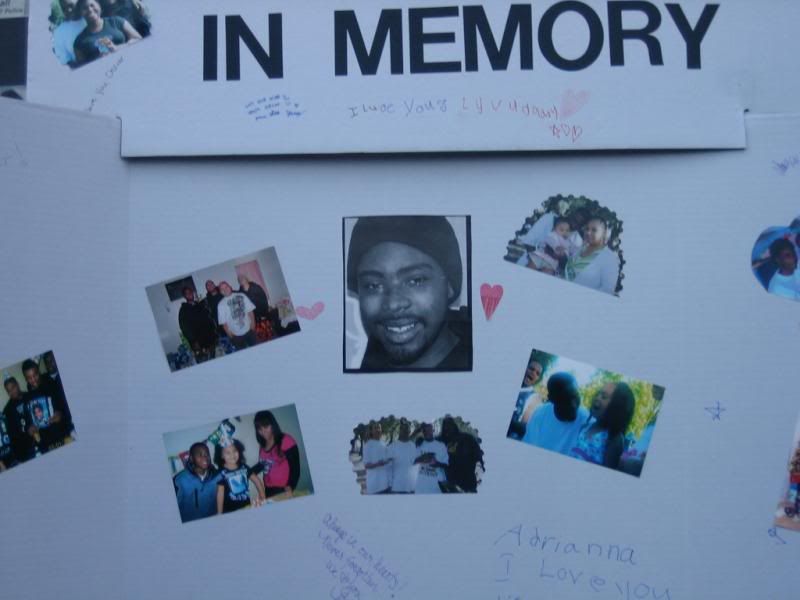
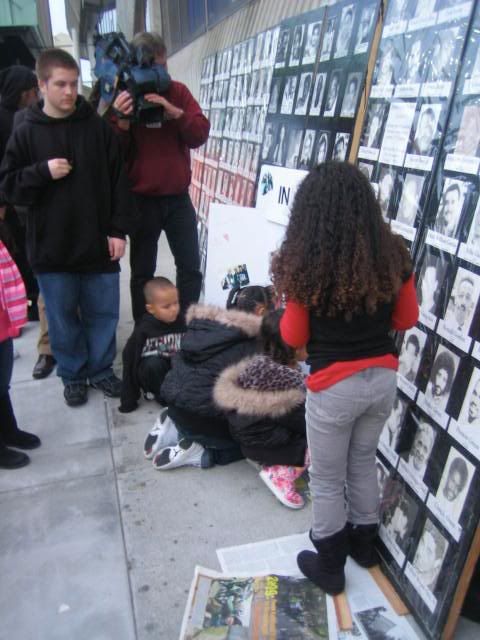
This New Year's marked one year since Oscar Grant's death. Pictures from the gathering at the Fruitvale BART.


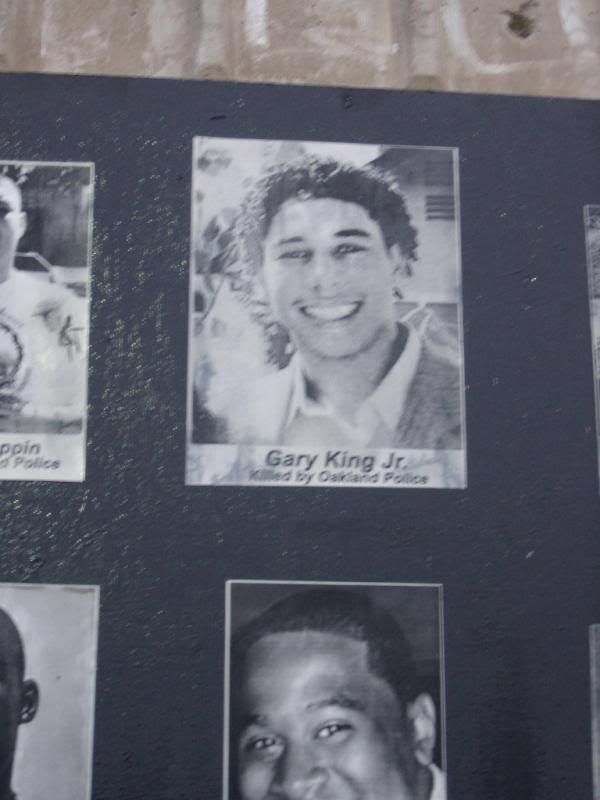
The board with the images are of men and women killed by law enforcement, including Gary King and Daniel Son Pham (both below).


King reminds me of so many of the young men with whom I went to school. And Pham, he could be a relative...

I cannot explain the psychic fear and sadness surrounding the issue of police brutality. I can, however, say that that fear and sadness is only intensified when one medium of people's voice is silenced. The beautiful mural of King was buffed a few months ago. A reason to hate graffiti abatement. The City of Oakland spends money on a special squad that works on this "issue," policing our material world to fit into one asthetic viewpoint.

Good night.

Wednesday, January 20, 2010

Uncovering Haiti

Obviously, there was an earthquake in Haiti this past week, followed by a huge aftershock today. While reports of the earthquake tend to make clear that this is Haiti’s largest earthquake in 200 years, media talking heads rarely explain why these details matters. Homes in the Caribbean are made of cement, protecting people from hurricanes, not earthquakes. As the poorest country in the Western Hemisphere, construction can be shoddy because folks cut corners to save money.

More importantly, the constraints around responding to the quake exacerbate the injury done in the short-term and long-term. Problems with aid and its dispersal lay in the lack of Haitian infrastructure to begin with. What happens when a natural disaster hits a region already suffering from “state-of-emergency” conditions? What happens when a country cannot feed itself, let alone weave the safety net it needs? How do we now imagine and approach solutions when media fails to expose underlying causes of the man-made disaster, before and after the earthquake?

The best response I’ve seen so far in the mainstream media has been from the International Crisis Group: “Haiti has sustained what may be the most severe natural disaster ever in the Western Hemisphere. Its historically weak physical and institutional infrastructure, and the sad fact that the earthquake’s heaviest blow was delivered to the capital city’s core, have only compounded Haiti’s vulnerability.” By physical infrastructure, consider this—when I was in Haiti, we drove on a national highway. Portions near the city of Cap Haitien (the second largest city) was paved, the rest was not. Rocks and gravel covered it, restricting our speed to about 30 miles an hour. Institutional infrastructure? Consider that public transportation either did not exist or was not organized. Hitching rides in empty trucks can be a way of life, yet in this situation it cannot save lives. Worse, remember that international loans have pressured the country to invest in exports rather than social services that would have provided the foundation for faster recovery.

The Group also writes: “No matter how much the United States gives, there cannot be enough relief for the desperately needy victims in the time frame that anyone would want.” However, they stop short of critiquing U.S. policy in the Caribbean. They only state that the U.S. has “special obligations” in supporting Haiti because the “two countries have shared long historical engagement, both negative and positive.” This history of engagement includes political and economic policies that has led to weak infrastructure and high population density around one city. I also fear that the title of this response, "In for a decade, not just a year," would also support beliefs that the U.S. should continue to intervene in Haitian governance. Maybe then it's alright that this response is tucked in quietly to the NYTimes rather than in the front page as the main analysis of the earthquake.

For more critical, progressive information on the earthquake, check out the links compiled here. Also, as we open up our checkbooks, let’s be smart about what organizations will truly support the Haitian people. Pass it on.

Modified by Blogger Tutorial

flo's funk - - - - - ©Template Nice Blue. Modified by Indian Monsters. Original created by http://ourblogtemplates.com

TOP